


The eyes are an important part of the body because they let us see and enjoy the beauty around us.
However, Glaucoma is a set of eye conditions that may lead to permanent vision loss if left untreated.
This serious condition often raises questions about – “Is Glaucoma hereditary?”.
Let us explore the genetic factors associated with Glaucoma and other high-risk factors that may cause Glaucoma.
Is Glaucoma hereditary
Yes, Glaucoma can be hereditary.
Hereditary Glaucoma is also called Inherited Glaucoma because it is passed down through genes from one generation to the next.
A study states that genetic factors play a main role in all the major forms of Glaucoma.
The above study also states that some types of Glaucoma have unique genetic variants linked to them.
The types of Glaucoma include Primary Open Angle Glaucoma (POAG), Primary Angle Closure Glaucoma (PACG), and Exfoliation Glaucoma (XFG).
Hereditary Glaucoma is caused by changes in certain genes that control how the eye’s drainage system develops and works.
People who have family members with Glaucoma may have more chances of developing the disease.
However, the inheritance patterns can be different, and it is not necessary that everyone with a Glaucoma family history will develop the condition.
Want to know more about the causes of Glaucoma? Read our article: Uncovering Glaucoma Causes: A Comprehensive Guide
Try: Careprost 3 ml of 0.03% and Bimat 0.03% from GoodRXMedicine now.
Save up to 90% on your medicine bills
What are the chances of getting Glaucoma genetically
The chances of getting Glaucoma genetically can vary based on various factors.
A study states that almost half of all patients with Primary Open-Angle Glaucoma have a family history of the disease.
Also, a person is nine times more likely to get Glaucoma if a first-degree relative (like a parent or child) has it.
Another research states that one may have a 13.6 times higher risk of getting Primary Closed-Angle Glaucoma if they have a sibling with it.
Genetics are not the only cause of Glaucoma. However, one should get regular eye checkups if they have a family history of Glaucoma.
Glaucoma genetic testing
Glaucoma genetic testing is a specialized medical test that studies a person’s genes to find out their chances of developing Glaucoma.
Doctors can find one’s Glaucoma risk by studying their genetic profile.
The main purpose of the test is to help find specific gene mutations or variations.
MYOC, OPTN, and TBK1 mutations are common in patients with early-onset Glaucoma.
Glaucoma genetic testing is not a routine part of the general Glaucoma test. But, it is helpful for individuals with a strong family history of Glaucoma.
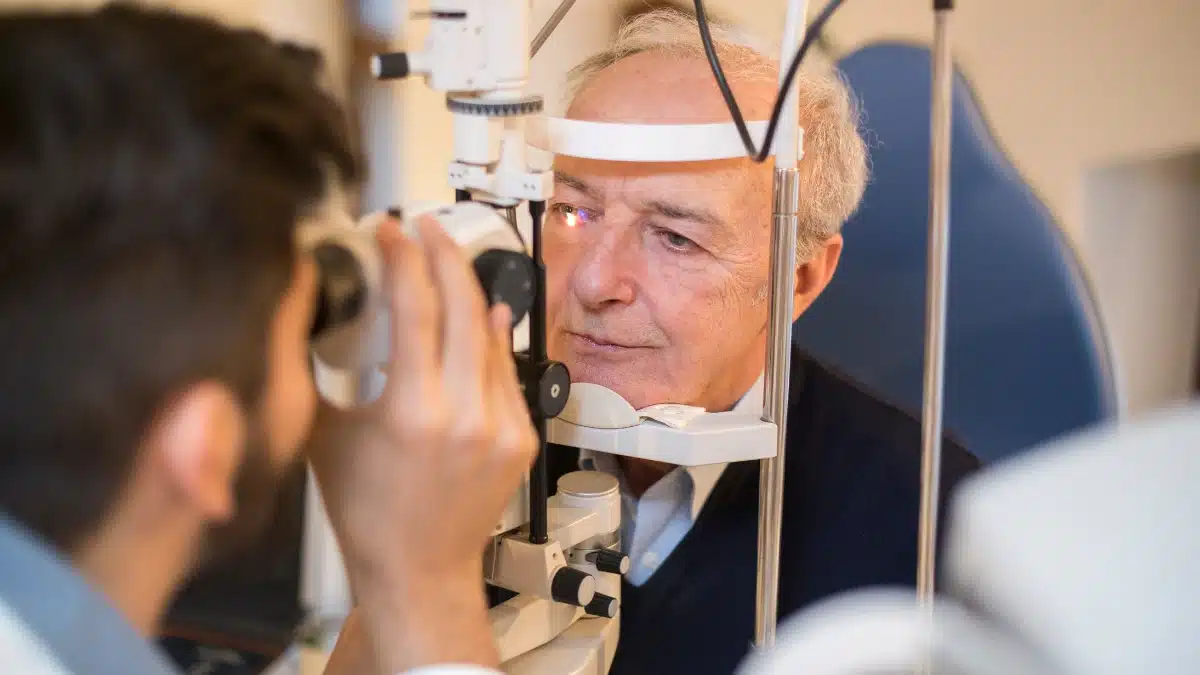
The test can help find people who are more likely to get Glaucoma and may need regular eye checkups to detect the condition early.
Explore more about the various treatment options for Glaucoma with our article: A Guide to Glaucoma Treatment Options
Other high-risk factors for Glaucoma

Genetics can be a major high-risk Glaucoma factor in individuals.
Some other risk factors may also contribute to the problem of Glaucoma. These factors include:
- Age
- Medical conditions like high blood pressure, and Diabetes can also cause Glaucoma
- Thin Cornea
- Recent eye surgery
- Extreme near-sightedness (Myopia)
- Smoking
- Eye injury
- Medicines like Corticosteroids (an anti-inflammatory medicine)
Glaucoma is more common in older adults and is one of the main reasons for blindness in people over 60.
Understanding the high-risk factors may help in managing and treating Glaucoma efficiently.
Try Lashgrow 3 ml from GoodRXMedicine now.
Key takeaways
Glaucoma is a serious eye condition caused by high eye liquid pressure and may lead to vision problems.
However, many people with a Glaucoma family history are curious about – “Is Glaucoma hereditary?”.
Yes, Glaucoma is influenced by genetic factors, and having a family history of the condition can increase one’s risk.
A person can consult a doctor and get a Glaucoma genetic test to find their chances of getting Glaucoma genetically.
However, genetics are not the only high-risk factor for Glaucoma. Other high-risk factors include age, eye injury, medical interaction, and more.

Frequently Asked Questions
Is Glaucoma inherited from mother or father?
Glaucoma is hereditary, but a specific parent cannot define its inheritance. It can be inherited from one parent or both, as it depends on multiple genetic factors.
Does Glaucoma always run in families?
No, Glaucoma does not always run in families. Genetics can increase one’s risk of Glaucoma, but other high-risk factors can also contribute to the eye condition. These factors include age, eye injury, and more.
What percentage of Glaucoma is hereditary?
Genetic studies show that more than 50 percent of Glaucoma runs in families. Having a first-degree relative with the eye condition increases the chances of developing Glaucoma in a person.
Does Glaucoma skip generations?
No, Glaucoma can not skip generations. The inheritance pattern of Glaucoma is complex and influenced by multiple genes. Consult a doctor and get a Glaucoma genetic test to know your risk of family-inherited Glaucoma.
At what age does Glaucoma start?
A person can develop Glaucoma at any age, but increasing age can be a high-risk factor for developing the condition. Consult a doctor and get regular eye checkups to detect Glaucoma early.
Citations
GoodRxMedicine only refers to credible, authoritative sources for our content. If you're curious about how we ensure the integrity of our content, we encourage you to read our Content Information Policy.
Average rating 4.3 / 5
How useful was this post?
Click on a star to rate it!
Gina Walters is the diet and lifestyle writer at Goodrxmedicine.com. She holds a level 6 diploma in natural nutrition and lifestyle and is an ardent preacher of veganism. A fitness enthusiast by heart, Gina’s passion for fitness follows into her personal life too.
Learn MoreDr. James Mitchell is a board-certified physician with 18+ years of clinical experience in Sexual Medicine and Reproductive Health. He helps patients navigate intimate health concerns through medically sound guidance and compassionate, patient-centered care.
Learn More