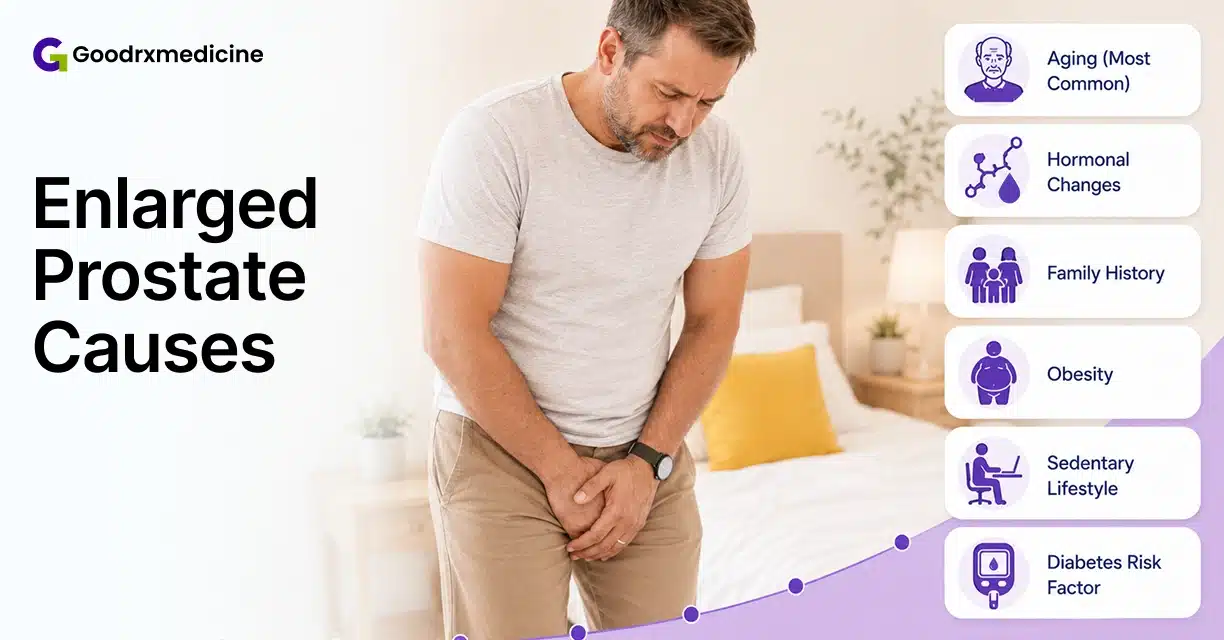



An enlarged prostate is one of the most common conditions affecting men as they get older, and the causes behind it are more complex than many expect. The medical name for the condition is Benign Prostatic Hyperplasia (BPH), which happens when the prostate grows and presses on the urethra, making it harder to pass urine. Most men notice it through a weak urine stream or frequent nighttime trips to the toilet.
Aging and a hormone called Dihydrotestosterone (DHT) are considered the two main drivers, but the exact causes are not fully understood. Risk factors include genetics, body weight, Type 2 Diabetes, and a sedentary lifestyle.
Read on to find out the enlarged prostate causes and risk factors that matter most, and which ones are within your control.
1. Getting older
Aging is the single biggest factor behind an enlarged prostate, even though the full biological reasons for BPH are not yet fully understood. The prostate naturally grows in two phases during a man’s life: first during puberty, and again from around age 25, when it continues to grow slowly for the rest of his life. This is why an enlarged prostate is rare in younger men but very common in older men.
For most of this time, the slow growth causes no problems. It is only from around the age of 50 onwards, when the prostate becomes large enough to press on the urethra, that symptoms begin to appear and affect how easily a man can pass urine.
Save up to 90% on your medicine bills
2. Type 2 Diabetes and metabolic syndrome
Type 2 Diabetes and metabolic syndrome are closely connected to an enlarged prostate. High blood sugar and insulin resistance can disturb the hormones and growth signals that control the size of the prostate.
Men who have Type 2 Diabetes, High Blood Pressure, and High Cholesterol together, a cluster known as metabolic syndrome, tend to have a higher risk of prostate enlargement. Keeping blood sugar and overall metabolic health under control can help protect the prostate over time.
3. Hormonal changes and Dihydrotestosterone (DHT)
Hormonal changes that come with age are one of the main causes of an enlarged prostate. A powerful form of testosterone called Dihydrotestosterone builds up in the prostate and stimulates its cells to keep multiplying.
DHT is the main hormone responsible for prostate growth. As men get older, overall testosterone levels fall, but DHT stays active inside the prostate tissue. This is why the gland can keep growing in later life even as testosterone declines. It is also why medicines that block the production of DHT can help shrink an enlarged prostate over time.
4. A family history of prostate problems
A family history of prostate problems raises your chances of developing an enlarged prostate. Men whose father or brothers have had Benign Prostatic Hyperplasia are more likely to develop it themselves, and often at an earlier age.
Inherited genes can affect how the prostate responds to hormones and how quickly it grows. This is why an enlarged prostate often runs in families, and why knowing your family history puts both you and your doctor in a better position to catch any early changes.
5. Obesity and a sedentary lifestyle
Both excess body weight and a lack of physical activity raise the risk of an enlarged prostate. Obesity affects hormone levels and promotes inflammation, both of which can encourage prostate growth. A sedentary lifestyle compounds this effect, as inactivity makes it harder to maintain a healthy weight and hormone balance.
Men who carry excess weight, particularly around the abdomen, and those who are physically inactive have a higher risk of Benign Prostatic Hyperplasia. Losing weight, exercising regularly, and following a balanced diet can reduce both the risk of prostate enlargement and the severity of existing symptoms.
6. Heart disease and poor blood flow
Heart Disease and poor circulation are also linked to an enlarged prostate. The prostate relies on a healthy blood supply, and conditions that impair circulation, including High Blood Pressure and Heart Disease, can interfere with how the prostate develops and functions over time.
A swollen prostate can also press on nearby nerves and blood vessels, which is one reason a swollen prostate can lead to Erectile Dysfunction in some men. This is why both conditions are often seen together in older men, and why looking after your heart health through a balanced diet and regular physical activity can benefit your prostate at the same time.
7. Inflammation and Prostatitis
Chronic inflammation of the prostate, a condition known as Prostatitis, is a recognized risk factor for prostate enlargement. When inflammation persists, it can damage prostate tissue and trigger repeated repair processes, leading to abnormal cell growth within the gland over time.
Men with a history of Prostatitis or recurring urinary tract infections carry a higher risk of developing Benign Prostatic Hyperplasia. The relationship between inflammation and prostate growth is still being studied, but managing chronic inflammation through treatment and a healthy lifestyle can help lower this risk.
How to maintain prostate health
While BPH cannot always be prevented, certain habits can lower the risk and help manage early symptoms:
- Keep to a healthy weight, as Obesity is a confirmed risk factor for prostate enlargement.
- Exercise regularly, since physical activity helps balance hormones and reduce inflammation.
- Follow a balanced diet rich in vegetables and fiber, and limit red meat and saturated fat.
- Avoid alcohol and limit caffeine, both of which irritate the bladder and worsen urinary symptoms.
- Avoid holding urine for long periods, as this puts unnecessary strain on the bladder over time.
- Speak to a doctor about prostate health screening if you are over 50 or have a family history of prostate problems.

Conclusion
The main enlarged prostate causes come down to aging and DHT buildup, with genetics, lifestyle, and metabolic health adding to the risk. As men get older, DHT continues to accumulate in the prostate tissue, driving slow but ongoing growth. A family history, chronic inflammation, and conditions such as Type 2 Diabetes can increase both the likelihood and the speed of enlargement.
Factors such as Obesity, a sedentary lifestyle, Type 2 Diabetes, Heart Disease, and Prostatitis also play a part, and many of these are within your control. Keeping a healthy weight, staying active, and managing conditions like Type 2 Diabetes can all help lower your risk.
An enlarged prostate is common and usually treatable, but symptoms such as a weak urine stream, difficulty starting to urinate, or frequent night-time trips to the toilet can also be signs of other conditions, including prostate cancer. If you notice any of these symptoms, speak to a doctor for a proper diagnosis and the right tests.
Frequently Asked Questions
Can stress cause an enlarged prostate?
No, stress does not cause an enlarged prostate, but it can make the symptoms worse. Stress and anxiety tighten the muscles around the bladder and prostate, which can increase the urge to pass urine, even though they do not change the actual size of the gland.
Can alcohol cause an enlarged prostate?
No, alcohol does not cause an enlarged prostate, but it can worsen the urinary symptoms. Alcohol increases urine production and irritates the bladder, which can make urgency and the need to pass urine more often worse in men who already have Benign Prostatic Hyperplasia.
Can a vasectomy cause an enlarged prostate?
No, a vasectomy does not cause an enlarged prostate. A vasectomy only seals the small tubes that carry sperm, and it does not affect the size or growth of the prostate gland. Research has found a link between having a vasectomy and developing an enlarged prostate.
Can sexual activity affect prostate size?
No, sexual activity does not affect the size of the prostate. The frequency of sex or ejaculation has no bearing on prostate growth. Prostate growth is driven by aging and hormones, not by sexual activity, and it can neither be caused nor prevented by it.
Can everyday medicines make an enlarged prostate worse?
Yes, some everyday medicines can make an enlarged prostate worse. Decongestants and antihistamines in cold and allergy remedies can tighten the muscles around the bladder, making it harder to pass urine. Always tell your doctor about any medicines you take if you have an enlarged prostate.
Citations
GoodRxMedicine only refers to credible, authoritative sources for our content. If you're curious about how we ensure the integrity of our content, we encourage you to read our Content Information Policy.
Average rating 4.5 / 5
How useful was this post?
Click on a star to rate it!
Julian Carter is a highly accomplished MBA graduate in Pharmaceutical Management, celebrated for his extensive experience and exceptional skills in the pharmaceutical industry. With a wealth of knowledge and expertise, Julian is a valuable contributor to the field and a trusted voice in pharmaceutical management. As a contributing writer for Goodrxmedicine.com, Julian is committed to educating and empowering individuals to make informed decisions about their health. His passion for the industry is evident in his work, and his dedication to improving the lives of others through education and empowerment is truly remarkable. With a reputation for excellence and a track record of success, Julian Carter is a respected and admired figure in pharmaceutical management. His insights and contributions to the field are highly valued, and his expertise has helped shape the direction of the industry for the better. Through his work as a contributing writer for Goodrxmedicine.com and beyond, Julian continues to make a meaningful impact in the lives of many. His commitment to excellence and dedication to improving the health of individuals and communities around the world make him an inspiration to others in the field.
Learn MoreDr. James Mitchell is a board-certified physician with 18+ years of clinical experience in Sexual Medicine and Reproductive Health. He helps patients navigate intimate health concerns through medically sound guidance and compassionate, patient-centered care.
Learn More