




Puffy eyes are what you see when the area around your eyes looks slightly swollen, full, and tired. This swelling is usually caused by temporary fluid buildup, medically termed Periorbital Edema. It often appears after crying, due to a lack of sleep, allergies, dehydration, or hormonal changes.
The good news is that most cases of puffiness under and around the eyes are manageable. Depending on the cause, simple home remedies, lifestyle changes and over-the-counter medications can help.
Below, we’ll cover the best ways to get rid of puffy eyes within 15 minutes. We will also discuss long-term methods such as a collagen-rich diet, a consistent sleep schedule, and cosmetic procedures. However, if the puffiness is persistent or painful, discontinue at-home treatment and consult an ophthalmologist.
Method 1: Try puffy eyes home remedies

If your eyes look swollen after crying, poor sleep, or a long day, cooling remedies can help calm the area quickly. These options are affordable, gentle on the skin, and easy to repeat whenever needed.
Tip 1. Use a cold compress
A cold compress is one of the quickest ways to reduce puffy eyes. Cool temperatures help tighten blood vessels and slow down fluid buildup under the skin. This makes it especially useful for morning puffiness or puffy, swollen eyes from crying.
Here’s how you can use a cold compress to relieve swelling:
- Wrap ice cubes, a cold gel pack, or a chilled spoon in a clean, soft cloth.
- Gently place it under your eyes or over closed eyelids.
- Hold for a total of 10-15 minutes while taking short breaks in between.
- Repeat once or twice a day, as needed.
- Never place the ice directly on your skin to prevent irritation.
Tip 2. Place cucumber slices on your eyes
Cucumber is naturally rich in water and antioxidants, which help soothe tired skin and reduce mild swelling. The cooling sensation also provides instant comfort when puffiness is caused by fatigue, heat, or fluid retention. Simply,
- Chill fresh cucumber slices in a refrigerator for at least 15 minutes.
- Lie down and place one slice over each closed eye.
- Relax for 10-15 minutes.
- Remove and gently pat the area dry.
- Repeat once or twice daily.
Tip 3. Use chilled tea bags
Green and black tea contain caffeine and plant compounds that help tighten the skin and reduce under-eye swelling. The cool temperature adds an extra soothing effect. This makes chilled tea bags particularly helpful for puffy eyes from crying, allergies, or eye strain.
If you want to try this puffy eyes remedy,
- Steep 2 tea bags in hot water for 2-3 minutes.
- Remove and refrigerate until cool.
- Place one tea bag over each closed eye and
- Leave on for 10-15 minutes.
- Rinse the eye area gently with cool water afterward.
Method 2: Try gentle massages for under-eye puffiness

While cold compresses calm swelling from the outside, massage works from within by encouraging fluid to drain away from the under-eye area. This is especially useful for morning swelling, puffy eyes from crying, or mild fluid retention after salty meals.
Tip 1: Do a light lymphatic drainage sweep
When fluid pools under the eyes overnight, it needs direction to drain properly. A light sweeping motion along the face can help encourage that movement as follows:
- Wash your hands and sit upright.
- Using flat fingers, gently glide from the center of your forehead outward toward the temples.
- Continue sweeping down along the sides of your face toward your neck.
- Repeat the same motion starting from the under-eye area, moving outward and then down toward the neck.
- Perform 3 to 5 slow rounds.
Tip 2: Use ring finger under-eye rolling
If your puffy eyes are from crying, fatigue, or screen strain, small, controlled movements directly under the eyes can help. You can practice it as follows:
- Using your ring finger, make gentle rolling or tapping motions under the eye.
- Move from the inner corner outward toward the temple.
- Continue for 30 to 60 seconds per eye.
- Finish by lightly sweeping from the temple down toward the side of the neck.
- Apply a small amount of eye-safe moisturizer or gel, if needed.
Tip: Since the skin under your eyes is very thin and sensitive, use slow, gentle movements. Avoid rubbing or pressing firmly, as this can worsen irritation or swelling.
Method 3: OTC eye care products for puffy eyes
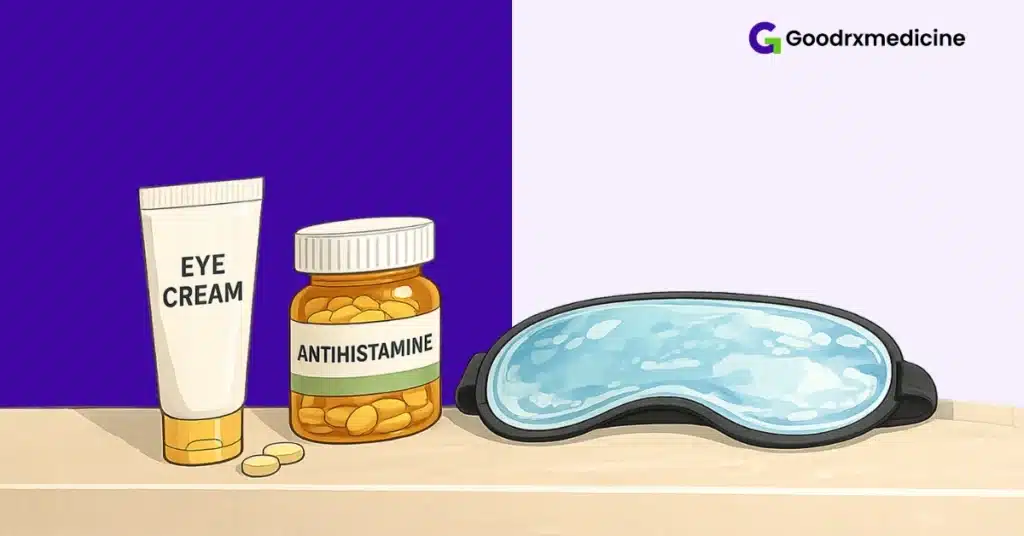
If home remedies and massage aren’t enough, the next step is using targeted over-the-counter (OTC) products designed to reduce puffiness. These can be especially helpful when puffy eyes are allergy-related, or linked to skin aging rather than a one-time trigger like crying or poor sleep.
Tip 1: Use cooling eye masks or eye patches
If you often wake up with puffy eyes or notice swelling after long hours of screen time, cooling eye masks and under-eye patches can help. Many contain ingredients like caffeine, hyaluronic acid, and aloe vera. Caffeine helps tighten and de-puff the area, hyaluronic acid restores skin plumpness, and aloe soothes irritation.
You can use these as follows:
- Chill the mask or patches before use for better results.
- Apply to clean, dry skin.
- Leave on for 10 to 15 minutes, or as advised on the product label.
Tip 2: Apply Retinol or anti-aging eye cream
If your puffiness looks more like under-eye bags, aging skin could be the reason. As you grow older, the skin under the eyes becomes thinner and less firm. This allows fat and fluid to appear more noticeable.
Retinol and anti-aging creams help improve collagen levels and skin firmness over time, reducing puffiness. You can use eye creams for puffy eyes as follows:
- Apply a pea-sized amount under both eyes using your ring finger.
- Gently tap along the orbital bone, not directly on the lash line.
- For an anti-aging cream, apply twice daily or as directed on the label. If using Retinol, use 2-3 times weekly.
- Apply sunscreen daily, as Retinol can increase sensitivity to sunlight.
Tip 3: Choose antihistamines for allergy-related puffiness
Image suggestion: A man sneezing with watery eyes, holding a tissue.
If your puffy eyes are accompanied by itching, redness, or watery eyes, allergies (triggered by histamines) can be the cause. By blocking these triggers, they can ease under-eye puffiness and discomfort. You can either take oral antihistamines or allergy-specific eye drops, but do not self-medicate without medical guidance.
Tip 4: Put lubricating eye drops or ointments for puffy eyes
Sometimes, puffiness is made worse by dryness, irritation, or prolonged screen exposure. While lubricating eye drops and ointments do not directly treat puffy eyes, they can reduce surface irritation and prevent inflammation.
Choose preservative-free artificial tears or lubricating eye drops like Eyemist Forte. Then,
- With your head tilted back, pull the lower eyelid to create a pouch.
- Put 1 drop into each eye and blink slowly to distribute it evenly.
- Close your eyes for 2-3 minutes for better absorption.
- Wait at least 10 minutes before applying eye creams or makeup.
Method 4: Adopt healthy lifestyle habits to prevent puffy eyes

Your diet, sleep pattern and alcohol intake play a major role in how often puffiness appears and how long it lasts. Unlike home remedies or OTC products that offer temporary relief, lifestyle changes provide a long-term solution for under-eye bulges.
Tip 1: Stay hydrated throughout the day
Dehydration tells your body to retain fluid, which often shows up as puffiness under and around the eyes. To prevent this,
- Start your morning with 1-2 glasses of room temperature water to flush overnight fluid retention.
- Drink water consistently throughout the day.
- Avoid gulping large amounts at once.
Tip: A simple trick to check your hydration levels is to observe your urine color. Pale yellow usually means you are well hydrated, while darker colors signal that your body needs more fluids.
Tip 2: Adjust elevation and sleep
Poor sleep quality and sleeping flat allow fluid to pool under the eyes overnight. In order to prevent puffy eyes, you should:
- Stick to a consistent sleep schedule, even on the weekends.
- Aim for 7 to 9 hours of undisturbed sleep each night.
- Sleep on your back with your head slightly elevated.
- Avoid sleeping face down, which increases pressure and swelling around the eyes.
Tip 3: Eat a diet rich in collagen
As we age, collagen levels naturally decline, circulation weakens, and under-eye puffiness becomes more noticeable. Thus, to support skin strength and circulation,
- Eat protein-rich foods (eggs, fish and legumes) to support collagen production.
- Include vitamin C-rich foods (citrus fruits, berries, and bell peppers) to improve circulation.
Tip 4: Cut down on salt and caffeine
High salt intake causes puffy eyes by leading the body to retain water. While caffeine can temporarily help, excessive amounts can lead to dehydration and rebound swelling. Learn to balance your intake by:
- Limiting processed and packaged foods (sauces, snacks, and ready meals) that are high in sodium.
- Avoiding salty meals and caffeinated drinks late at night.
- Drinking water alongside coffee or tea to prevent dehydration.
Tip 5: Limit alcohol and quit smoking
Alcohol dehydrates the body and dilates blood vessels, which worsens under-eye puffiness. Smoking damages collagen, reduces oxygen delivery to the skin, and accelerates visible aging around the eyes. To reduce puffiness linked to alcohol and smoking,
- Practice occasional drinking and avoid daily consumption.
- Drink water before and after alcohol to prevent dehydration.
- Avoid smoking or seek support to quit.
Tip: Occasional puffy eyes are common. However, consult a doctor if swelling keeps recurring, affects only one eye, appears with itchy or watery eyes, occurs with body swelling, or starts after a new medication.
Method 5: Try cosmetic procedures under medical advice

If your under-eye puffiness does not improve despite trying home remedies, eye creams or lifestyle changes, the cause may be structural (bags under eyes) rather than temporary fluid buildup. This means you might be dealing with under-eye bags, which are often linked to genetics, aging, or weakened tissues.
In these cases, cosmetic procedures can help improve contour and skin firmness. Discuss these options with a qualified dermatologist to determine what’s most appropriate for your skin.
Tip 1: Consider dermal fillers to improve under-eye contour
Dermal fillers (Hyaluronic Acid or Polymethyl Methacrylate) can help smooth the hollow area between the lower eyelids and the cheeks. By improving this transition, eye bags and puffiness may appear less noticeable.
Before opting for fillers, remember that results usually last 6 to 12 months, and mild swelling or bruising can occur after treatment.
Tip 2: Explore chemical peels to improve skin texture
Chemical peels gently remove the top layer of skin to improve texture and tone. They can help tighten mildly loose skin and reduce the appearance of fine lines around the eyes. This can make eye bags look less pronounced.
For significant under-eye bulges, you might need multiple sessions. Moreover, expect temporary redness, peeling, or sensitivity after the treatment.
Tip 3: Discuss laser resurfacing to tighten skin
Laser resurfacing uses controlled heat to stimulate collagen production and improve skin firmness. Over time, this can help tighten the under-eye area and soften the appearance of eye bags.
While results develop gradually over several weeks, swelling and redness can last a couple of weeks. Proper aftercare, as advised by your provider, will help support safe recovery and optimal results.
Frequently Asked Questions
Why are my eyes puffy in the morning?
Morning puffiness usually happens because fluid accumulates around the eyes while you sleep, especially if you lie flat. Poor sleep, high salt intake the night before, and dehydration are all causes of puffy eyes in the morning.
What deficiency causes bags under the eyes?
Nutrient deficiencies do not directly cause eye bags, but low levels of iron, protein and vitamin B12 can worsen under-eye puffiness. Iron deficiency, in particular, can make the under-eye area look darker and more swollen due to reduced oxygen delivery to tissues.
What do puffy eyes say about your health?
Persistent or worsening puffiness can indicate chronic allergies, sinus problems, hormonal changes, or systemic fluid retention. When accompanied by other symptoms like pain or watery eyes, puffy, swollen eyes may signal an underlying condition that should be evaluated by a doctor.
What should I drink to depuff eyes?
Drinking plain water is the most effective way to reduce puffiness caused by dehydration or fluid imbalance. Chamomile and green tea also help. Limiting alcohol and high-sodium drinks supports faster depuffing.
What is the difference between eye bags and puffy eyes?
The primary difference is that puffy eyes come and go, while eye bags tend to persist over time. Puffy eyes refer to a temporary fluid buildup usually caused by crying, lack of sleep, or allergies. On the contrary, bags under the eyes are more permanent and linked to aging and weakened tissues.
When referencing outside resources, GoodrxMedicine always provides full citations. To learn more about the measures we use to maintain the quality of our content, please review our Content Information Policy.