




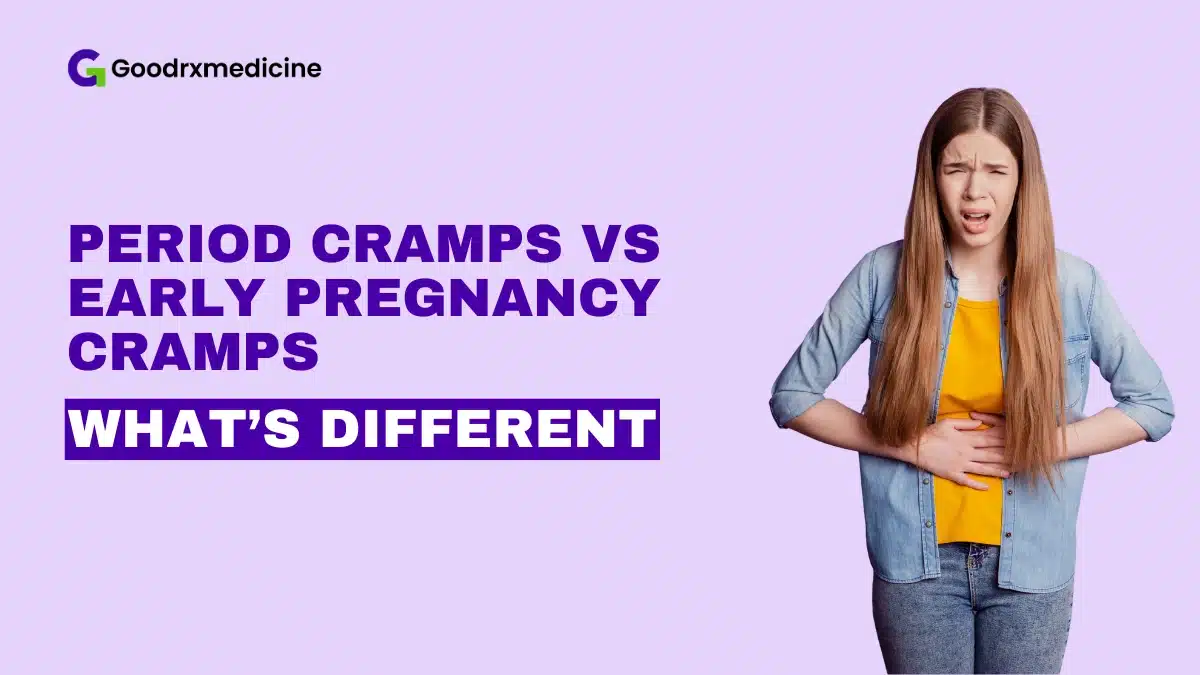
Distinguishing period cramps vs early pregnancy cramps can be confusing because both can feel like aching or pulling pain in the lower abdomen. Period cramps usually begin shortly before or during menstruation and are often stronger or more persistent.
Early pregnancy cramps can happen around the implantation time, when a fertilized egg attaches to the lining of the uterus. Not everyone experiences this cramping, but when it does happen, it is usually mild and can last from a few hours to 1-3 days.
This article explains the key differences between period cramps and early pregnancy cramps, including their location, duration, spotting, related symptoms, and when to take a pregnancy test.
Period cramps vs early pregnancy cramps: Key signs
Uterine contractions cause period cramps during menstruation, which can lead to dull pain in the lower abdomen and sometimes the back or thighs. Early pregnancy cramps can happen due to implantation or early uterine changes. They are usually milder, shorter, and more localized.
The key differences include timing, intensity, duration, spotting, and pain location. The comparison table shows these differences at a glance:
| Parameter | Period cramps | Early pregnancy cramps |
|---|---|---|
| Timing | 1-2 days before period | About 6-12 days after ovulation |
| Duration | 1-2 days before period + first 2-3 days | A few hours to 1-3 days, comes and goes |
| Location | Lower abdomen to back and thighs | Localized at the lower pelvis or abdomen |
| Associated symptoms | Premenstrual Syndrome (PMS) symptoms, such as bloating, acne, mood changes, and food cravings | Nausea, missed period, increased urination, breast tenderness |
| Intensity | Mild-severe, mostly stronger, sharper | Mild |
| Related bleeding pattern | Heavy flow, 4-7 days, clots | Light pink or brown spotting, 1-2 days |

Timing and duration
Period cramps usually follow the menstrual cycle closely. They often start 1-2 days before menstruation or on the first day of bleeding, become stronger during heavier flow, and ease as bleeding slows. For many people, they last during the first 2-3 days of menstruation.
Implantation cramps can occur about 6-12 days after ovulation or conception, which can be close to the expected period date. They are usually mild, short-lived, and can last for a few minutes to a few hours. In some cases, they can come and go over 1-3 days.
The clearest clue is whether the cramps lead to regular menstrual bleeding. Cramps followed by normal flow are more likely period-related. If mild cramps happen near the expected period without normal menstrual bleeding, taking a pregnancy test after a missed period can help clarify the cause.
Location of the cramps
Pain location can provide another useful clue, especially when compared with timing and bleeding pattern. Menstrual cramps are caused by stronger uterine contractions, which is why the discomfort can spread more widely through the pelvis and lower back, hips, or inner thighs. This makes menstrual pain feel more widespread.
Early pregnancy cramps, including implantation cramps, are usually more localized in the lower abdomen or pelvic area. Some women describe them as mild pulling, stretching, or pressure near the uterus. Unlike period cramps, they are less likely to radiate strongly to the back or legs.
Noticing if the pain is widespread or focused can help identify the cause, but it should be considered alongside associated symptoms like bloating or nausea.
Associated symptoms
Period-related symptoms, also called Premenstrual Syndrome (PMS), accompanying cramps, often include bloating, mood changes, acne, food cravings, fatigue, and breast tenderness. These symptoms usually appear before the period and often improve once bleeding starts or ends.
Early pregnancy symptoms can overlap, but they tend to last longer or feel different. Breast sensitivity, for example, is common in both, but in early pregnancy, it can feel more intense, persist beyond the expected period date, or come with nipple tenderness. Pregnancy-related symptoms can also include nausea, increased urination, food aversions, and a missed period.
It’s probably because of PMS also, if the symptoms disappear when bleeding starts. If symptoms continue without a normal period, early pregnancy becomes more likely.
Duration
Period cramps can last for the first 2-3 days of menstruation. The pain can come and go and can feel stronger during heavier flow before easing as bleeding slows.
Early pregnancy cramps, including implantation cramps, are usually shorter and can come and go instead of lasting continuously. They can last for a few minutes to a few hours at a time, or come and go over 1-3 days. Unlike period cramps, they usually do not follow a steady pattern and do not involve heavy bleeding.
Short, mild cramps that do not progress into regular menstrual flow can be one possible sign of early pregnancy.
Intensity
Period cramps are often stronger than early pregnancy cramps. Unlike menstrual cramps, early pregnancy cramps are less likely to become progressively stronger or interfere with daily activities.
If cramps happen around the expected period but normal bleeding does not start, take a home pregnancy test after a missed period. Testing too early can give a false negative because pregnancy hormone levels may still be low. If the result is negative and the period still does not start, test again after a few days or consult a healthcare provider.
Bleeding or spotting
The bleeding pattern is one of the most practical signs to compare. Period cramps usually come with menstrual bleeding that lasts about 4-7 days. The flow often becomes heavier, can include clots, and follows your usual period pattern.
Some pregnancies do not cause spotting. Implantation cramps can be accompanied by light spotting. This spotting is usually pink or brown, much lighter than a period, and can last from a few hours to about 1-2 days. It usually does not become a heavy or steady flow.
If cramps happen with light spotting, delayed bleeding, or no normal period, a pregnancy test can help confirm the next step.
When to see a doctor
Mild cramping can happen with both periods and early pregnancy. However, medical attention is important if cramps feel unusual or different from your regular pattern.
Seek medical help if you experience:
- Heavy bleeding with intense cramps.
- Dizziness, fainting, fever, or chills.
- Unusual vaginal discharge or odor.
- Pain or burning while urinating.
- Cramps with severe nausea or vomiting.
- Pelvic pain that interferes with daily activities.
Cramping with a positive pregnancy test always warrants a doctor’s call, while period cramps need attention only if they’re unusually severe, off-cycle, or accompanied by heavy bleeding.
Conclusion
When comparing period cramps vs early pregnancy cramps, start with the pattern. Period cramps usually follow a monthly cycle, begin 1-2 days before bleeding, and get stronger during heavier flow. They can also spread to the back or thighs and often last for the first 2-3 days of menstruation.
Early pregnancy cramps, on the other hand, can feel less predictable and can appear near the expected period. They are usually milder, more central in the pelvis, and can come and go over 1-3 days without turning into normal menstrual flow.
The bleeding and symptoms are also different. Period cramps usually come with heavier bleeding and possible clots, while early pregnancy can involve light pink or brown spotting, nausea, increased urination, stronger breast sensitivity, or a missed period.
If the signs are unclear, the next practical step is to take a pregnancy test. However, seek medical help if cramps are severe, one-sided, persistent, or occur with heavy bleeding, dizziness, fainting, fever, or unusual discharge.
Frequently Asked Questions
Can cramps occur due to stress, similar to periods or early pregnancy?
Yes, cramps can occur due to stress and feel similar to period or early pregnancy cramps. Stress can affect hormones, digestion, muscle tension, and cycle timing, leading to lower abdominal discomfort. However, stress-related cramps do not confirm pregnancy, so a missed period still needs testing.
Can early pregnancy cramps be mistaken for gas pains?
Yes, early pregnancy cramps can be mistaken for gas pains because both can cause mild lower abdominal discomfort. Gas pain often shifts, improves after passing gas, or comes with bloating. Pregnancy-related cramping usually feels lower in the pelvis and can appear with breast tenderness or a missed period.
Is it normal to have cramps but no period or pregnancy?
Yes, it can be normal to have cramps without a period or pregnancy, especially around ovulation, during stress, or with digestive issues. Track when the cramps occur, how long they last, and whether they follow a monthly pattern, and see a doctor if you feel it’s necessary or if you’re confused.
How can I manage or prevent period or early pregnancy cramps?
Period cramps can be managed with OTC pain relievers, a warm compress, hydration, and light movement. To prevent worsening cramps, limit excess caffeine, salt, and processed foods. For early pregnancy cramps, rest, drink fluids, and consult a healthcare provider before taking pain medicine.
Does lower back pain occur due to period or pregnancy cramps?
Yes, lower back pain can occur with both period and pregnancy cramps. Period-related back pain often appears before or during bleeding and improves as the period ends. In pregnancy, back discomfort can occur due to pelvic and hormonal changes.
Is cramping normal at 5 weeks pregnant?
Yes, mild cramping can be normal at 5 weeks pregnant as the uterus starts changing and pregnancy hormones rise. The cramps should be mild, not severe or one-sided. Contact a doctor urgently for heavy bleeding, fainting, or sharp pain.
Does cramping during ovulation mean pregnancy?
No, cramping during ovulation does not mean pregnancy. Ovulation cramps happen when an ovary releases an egg, usually in the middle of the menstrual cycle. Pregnancy can only be confirmed later with a missed period, symptoms, and a positive pregnancy test.
GoodRxMedicine only refers to credible, authoritative sources for our content. If you're curious about how we ensure the integrity of our content, we encourage you to read our Content Information Policy.

Julian Carter is a highly accomplished MBA graduate in Pharmaceutical Management, celebrated for his extensive experience and exceptional skills in the pharmaceutical industry. With a wealth of knowledge and expertise, Julian is a valuable contributor to the field and a trusted voice in pharmaceutical management.
As a contributing writer for Goodrxmedicine.com, Julian is committed to educating and empowering individuals to make informed decisions about their health. His passion for the industry is evident in his work, and his dedication to improving the lives of others through education and empowerment is truly remarkable.
With a reputation for excellence and a track record of success, Julian Carter is a respected and admired figure in pharmaceutical management. His insights and contributions to the field are highly valued, and her expertise has helped shape the direction of the industry for the better.
Through his work as a contributing writer for Goodrxmedicine.com and beyond, Julian continues to make a meaningful impact in the lives of many. His commitment to excellence and dedication to improving the health of individuals and communities around the world make him an inspiration to others in the field.