
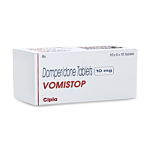
Domperidone
Starting at just
$4.56

Our team will check availability and reach out to you shortly.
Continue ShoppingEnter your details to sign in
Don't have an account?
Enter your details to create account
Already have an account?
We will send you reset instruction on email
Domperidone is a prokinetic and antiemetic medication that blocks dopamine D2 receptors to improve gastric motility and relieve nausea and vomiting. It helps food move more smoothly through the stomach and upper digestive tract, which can reduce symptoms linked to delayed gastric emptying, indigestion, bloating, and reflux-like discomfort. Domperi… Read more
Domperidone
Domperidone is a prokinetic and antiemetic medication that blocks dopamine D2 receptors to improve gastric motility and relieve nausea and vomiting. It helps food move more smoothly through the stomach and upper digestive tract, which can reduce symptoms linked to delayed gastric emptying, indigestion, bloating, and reflux-like discomfort.
Domperidone is the active ingredient of Motilium. Generic Domperidone medicines are also available and contain the same active ingredient. As a result, it provides a more affordable alternative to the brand-name medication.
Domperidone works by blocking dopamine D2 receptors in the gut and in the brain’s vomiting-control pathway. Dopamine can slow stomach movement and trigger nausea signals. By reducing this effect, this antiemetic medicine improves gastric motility and helps the stomach empty more efficiently.
This action makes Domperidone useful for nausea treatment, vomiting relief, indigestion treatment, and symptoms linked to delayed gastric emptying. It is often taken before food because it works best when stomach movement needs support during digestion. Effects usually begin within 30 to 60 minutes, although response can vary by dose, meal timing, and the underlying condition.
Domperidone is primarily prescribed for the following:
Doctors can also prescribe Domperidone tablets for breastfeeding to support better breast milk production. However, this is an off-label use and should only be done under medical supervision.
Domperidone is available in different strengths and formulations. The appropriate dose depends on the condition being treated, age, medical history, heart-risk factors, and response to the medication.
Always follow your healthcare provider’s instructions regarding Domperidone dosage and administration.
Domperidone side effects are usually mild for many people, but serious heart-related reactions need urgent attention. Side effects can vary based on dose, age, treatment duration, other medicines, and existing heart or liver conditions.
These effects are usually mild, temporary and can improve as the body adjusts to the medicine.
These effects should be discussed with a doctor if they continue or become bothersome.
Although rare, the following side effects can be serious and need medical attention:
Seek emergency medical help if any of these symptoms occur. They should not be treated as minor side effects or ignored.
Domperidone can interact with certain medicines, health conditions, and foods. They can increase the chance of side effects occurring, especially QT prolongation, irregular heartbeat, and higher Domperidone levels in the blood.
Some medicines can increase Domperidone levels or add to its QT-prolonging effect. These combinations can raise the risk of serious heart rhythm problems.
Certain health conditions can make Domperidone less suitable or increase the risk of serious side effects. A doctor should review a patient's medical history before prescribing it.
Food and meal timing can affect how quickly Domperidone works. Patients should follow the doctor’s timing instructions for best results.
This is not a complete list of Domperidone interactions. Always inform the doctor about all prescription medicines, OTC drugs, supplements, and medical conditions before taking Domperidone.
Domperidone is not suitable for everyone, especially people with heart rhythm risks, certain medical conditions, or interacting medicines.
Domperidone should be stored at room temperature between 15°C and 30°C (59°F to 86°F) in a cool, dry place away from direct sunlight, heat, and moisture. Keep Domperidone tablets in their original packaging and out of reach of children and pets. Do not use expired medicine. Dispose of unused tablets through a medicine take-back program or local pharmacy guidance.
Choosing the right Domperidone product depends on the prescribed dose, symptom pattern, formulation, legal availability, and heart-risk profile. A doctor should confirm the right option based on the digestive condition and treatment plan.
Domperidone should be taken exactly as prescribed, usually 15 to 30 minutes before meals. Taking it before food helps support stomach movement during digestion. Do not increase the dose or continue it longer than advised, because longer use can increase heart rhythm risks.
Domperidone works best when taken before meals. It can be taken after food if needed, but the medicine can take longer to work. Follow the timing given by the prescribing doctor, especially if Domperidone is being used for delayed gastric emptying or gastroparesis symptoms.
No, Domperidone is generally not preferred for long-term use unless a specialist decides the benefits outweigh the risks. Long-term or high-dose use can increase the risk of QT prolongation, irregular heartbeat, and serious cardiac events. Medical monitoring can be needed in higher-risk patients.
Domperidone should not be combined with certain antibiotics, antifungals, antidepressants, HIV medicines, or heart rhythm medicines without medical approval. Some of these drugs increase Domperidone levels or add to the QT prolongation risk, which can make the combination serious.
Domperidone while breastfeeding should only be used under specialist medical advice. It is sometimes used off-label to support milk supply in some countries, but it is not approved for this purpose in many regions. Heart-risk screening and careful dose control are important before use.
Don't worry — your cart and saved data are safe.
You'll be logged out of this device. Your saved information will remain secure.